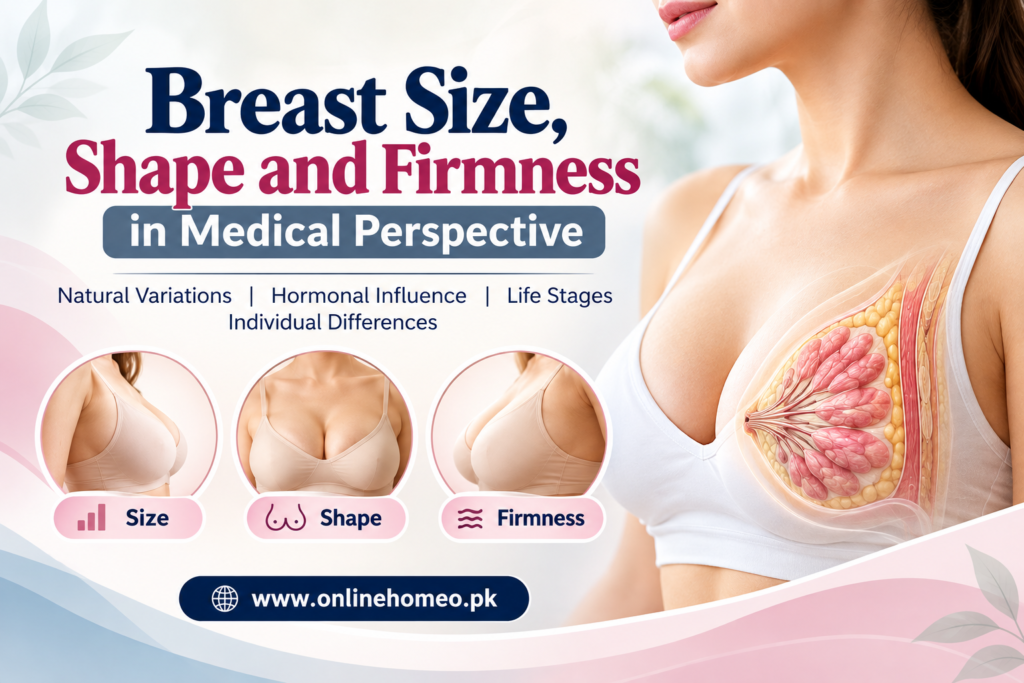
Causes, Underdevelopment, Sagging & Homoeopathic Approach
Breast size and shape are common concerns among females of different ages. Some girls experience underdeveloped breasts during puberty, while adult women may notice loss of breast volume, changes in breast shape, sagging or asymmetry after hormonal changes, weight loss, pregnancy, breastfeeding or menopause.
There is no single breast size or cup size that is medically considered ideal for every woman. Genetics, hormones, body composition, age and reproductive history all influence female breast development, size and shape.
However, when previously normal breasts become noticeably smaller, lose their shape, or breast changes occur together with menstrual or hormonal problems, the underlying cause should be evaluated.
This article explains the common causes of changes in breast size and shape, breast atrophy, underdeveloped breasts, sagging breasts, changes after breastfeeding, nipple problems and breast pain, along with the traditional homoeopathic approach to these complaints.
What Determines Breast Size and Shape in Females?
Female breast size is determined by a combination of glandular tissue, fatty tissue, connective tissue and individual anatomy.
The major factors affecting breast size and shape include:
• Genetics and family tendency
• Estrogen and progesterone activity
• Age and stage of development
• Body weight and body-fat distribution
• Pregnancy and breastfeeding
• Menstrual and reproductive changes
• Menopause
• Skin elasticity and supporting tissues
• General nutritional and endocrine health
For this reason, two healthy women of the same age and body weight may naturally have very different breast sizes.
Small breasts alone do not mean that a woman has a hormonal disorder.
What Is Breast Atrophy?
Breast atrophy refers to a reduction in previously developed breast tissue or breast volume.
A woman may notice that her breasts have become smaller than before, less full, softer, flattened, less firm, different in shape or more asymmetrical.
Breast atrophy should be distinguished from breast hypoplasia or underdeveloped breasts, where breast tissue has not developed fully in the first place.
Loss of breast volume can occur following hormonal changes, significant weight loss, pregnancy and breastfeeding, menopause, ageing or certain medical conditions.
Breast Atrophy Due to Hormonal Imbalance
Hormones play an important role in female breast development. Estrogen, progesterone and prolactin are particularly important in breast development, menstrual physiology, pregnancy and lactation. Other endocrine functions can also indirectly influence breast health.
A hormonal problem deserves consideration when changes in breast size or breast development occur together with irregular or absent menstrual periods, delayed puberty, fertility problems, unusual weight changes, excessive facial or body hair, persistent acne, abnormal nipple discharge or difficulty with lactation.
However, breast size should never be used alone to diagnose a hormonal imbalance. A proper clinical and hormonal assessment may be needed where associated symptoms are present.
Underdeveloped Breasts During Puberty
Breast development normally begins during puberty, but there is considerable variation in when it starts and how much the breasts eventually develop.
Some teenage girls naturally have small breasts despite otherwise normal development. This usually does not require treatment.
Assessment becomes more relevant when there is very little breast development despite advancing puberty, delayed menstruation, absence of other expected pubertal changes, marked asymmetry, very low body weight, nutritional problems or symptoms suggesting an endocrine disorder.
The aim should not be to achieve a particular cup size. The important question is whether normal female development is taking place appropriately.
Changes in Breast Shape
Changes in breast shape are extremely common. Breasts may naturally be round, elongated, relatively flat, widely spaced or mildly asymmetrical. One breast can also be slightly larger than the other.
Breast shape may change following puberty, pregnancy, breastfeeding, weight gain, weight loss, hormonal changes, ageing and menopause.
Some women describe these changes as “de-shaped breasts.” A gradual bilateral change can be physiological. A new change affecting only one breast, especially with a lump, nipple retraction or skin changes, requires medical assessment.
Sagging Breasts: Why Does Breast Shape Change?
Sagging breasts, medically known as breast ptosis, occur when breast skin and supporting tissues lose some of their firmness and elasticity.
Common contributing factors include ageing, pregnancy, changes in breast volume, genetics, gravity, significant weight fluctuations, reduced skin elasticity and smoking.
It is useful to distinguish sagging breasts from breast atrophy. Breast atrophy primarily refers to loss of volume, whereas breast ptosis describes downward displacement or sagging. Both changes can occur together.
Significant breast sagging is mainly a structural change, so medicines should not be expected to physically lift breast tissue or guarantee restoration of a particular cup size.
Dwindled Breasts During or After Breastfeeding
Changes in breast size after breastfeeding are common.
During pregnancy and lactation, breast tissue and milk production can make the breasts appear considerably fuller. As breastfeeding decreases or stops, some of this fullness naturally disappears.
Consequently, breasts may appear smaller, softer, less firm, less full at the top or different in shape than before pregnancy. Women sometimes describe this as dwindling or shrinking of the breasts after nursing.
These changes are often physiological rather than signs of disease. Importantly, breast size does not reliably predict a woman’s ability to produce breast milk.
Cracked and Sore Nipples
Cracked and sore nipples are particularly common during breastfeeding. Possible causes include improper breastfeeding attachment, repeated friction, dry or irritated skin, dermatitis, trauma and infection.
Persistent nipple cracks should be evaluated because damaged skin can make infection more likely. Correcting breastfeeding position and attachment can be particularly important when nipple soreness develops during nursing.
Breast Pain and Inflammation
Breast pain can occur at different stages of life and does not always indicate a serious problem.
Possible causes include hormonal fluctuations, menstrual changes, pregnancy, breastfeeding, cystic changes, trauma and infection.
A breast that becomes red, hot, swollen and very painful, particularly with fever or chills, requires medical attention. During breastfeeding, these symptoms may indicate mastitis, and occasionally an abscess can develop.
Homoeopathic Treatment for Breast Size & Shape Complaints
Homoeopathy traditionally follows an individualized approach to breast complaints.
A responsible homoeopathic consultation should not simply prescribe one medicine because a patient wants larger breasts. Instead, the physician considers whether changes in breast size or shape occur alongside hormonal symptoms, menstrual irregularities, delayed development, pregnancy-related changes, lactation problems, breast pain or tenderness, general constitutional symptoms, mental and emotional characteristics and individual modalities.
The remedy is then selected according to the complete symptom picture.
Homoeopathic Medicines Traditionally Considered for Breast Complaints
Conium Maculatum — Traditionally considered where there is hardness, induration, sensitivity or pain of the mammary glands, when the overall symptom picture corresponds.
Phytolacca Decandra — Commonly described in traditional homoeopathic literature for painful, sensitive and inflamed breasts, particularly in complaints associated with lactation.
Pulsatilla — May be considered where breast complaints occur alongside a characteristic menstrual or hormonal symptom picture, provided the general symptoms correspond.
Calcarea Carbonica — Traditionally considered constitutionally in certain patients with developmental, menstrual and metabolic characteristics corresponding to the Calcarea picture.
Silicea — Traditionally associated with certain chronic glandular and suppurative tendencies. A suspected breast infection or abscess, however, requires medical evaluation.
Homoeopathic remedy selection should be individualized rather than based on breast size alone.
Can Homoeopathy Increase Breast Size?
Women frequently search for homoeopathic medicine for increasing breast size, but it is important to distinguish a medical problem from a cosmetic expectation.
There is no established evidence that homoeopathic medicines can reliably enlarge normally developed breasts, increase a woman’s cup size or permanently reshape breast anatomy.
Where reduced or underdeveloped breast appearance occurs alongside menstrual, endocrine, developmental or lactational complaints, those underlying concerns should be properly assessed.
Homoeopathy, when chosen, can then be considered as an individualized complementary approach based on the complete patient picture rather than as a guaranteed breast-enlargement treatment.
What Is the Normal Breast Size According to Age?
There is no medically established ideal breast size according to age.
A healthy 20-year-old woman may naturally have smaller breasts than another healthy woman of the same age. The same principle applies throughout adult life.
Therefore, charts claiming a “correct breast size” at age 16, 20, 25, 30 or 40 should be treated cautiously.
What matters medically is normal development, breast health and whether there has been an unexplained change from the woman’s previous condition.
Does Breast Cup Size Matter?
Cup size matters primarily for choosing a properly fitted bra. It is not a medical measurement of female health.
Breast cup size does not determine fertility, female hormone levels, ability to become pregnant, ability to breastfeed, general health or femininity.
Cup size must also be interpreted together with the band measurement. The same cup letter paired with a different band size does not necessarily represent the same breast volume.
The objective should therefore be healthy breast development and appropriate evaluation of abnormal changes, rather than achieving a particular cup size.
When Should Changes in Breast Size or Shape Be Checked?
A medical consultation is advisable if breast size or shape changes are accompanied by a new breast lump, sudden change in one breast, progressive unexplained asymmetry, skin dimpling or puckering, newly inverted nipple, bloody nipple discharge, persistent unexplained nipple discharge, persistent redness or swelling, severe or persistent breast pain, fever with breast inflammation, unexplained progressive loss of breast volume or significant menstrual or hormonal abnormalities.
New breast changes should be properly diagnosed before treatment is started.
Breast Size and Shape: A Healthy Perspective
Breast size and shape naturally differ among women and change throughout life.
Small breasts are not automatically underdeveloped breasts. Sagging does not necessarily indicate hormonal deficiency, and changes after pregnancy or breastfeeding are often physiological.
When breast changes occur alongside other symptoms, the sensible approach is to determine why the change has occurred.
For women considering homoeopathic care, treatment should similarly focus on the complete individual health picture rather than cup size alone.
Consult a Homoeopathic Physician
Concerned about breast development, breast size and shape changes, hormonal symptoms, menstrual irregularities, breastfeeding-related problems or associated breast complaints?
A detailed consultation can help identify symptoms that require medical investigation and determine whether an individualized complementary approach is appropriate.
onlinehomeo.pk
An Online Homoeopathic Clinic & Store